
Modern Dental Technology · Patient guide · Gomti Nagar
Dental X-Ray in Lucknow: Questions About Digital Imaging
Wondering why a dentist might discuss an X-ray, what a digital image can show, or how Vatech RVG fits into dental assessment? This guide helps patients in Gomti Nagar and across Lucknow ask clear, practical questions—without assuming imaging is needed for everyone.
Reading time: About 8 minutes · Educational information, not diagnosis
At a glance: understand the purpose before the image
Imaging answers a clinical question
A dental image is one source of information. A clinician considers it alongside your concern, health and dental history, and examination. Ask what question an image is intended to help answer.
Digital describes capture and viewing
Digital systems record radiographic images electronically. The label alone does not explain why imaging is relevant to a particular patient.
Ask about your case
Sai Specialized Dental Hospital lists Vatech RVG and digital X-Ray. Confirm case-specific use and Gomti Nagar branch availability with the clinic.
Why might a dentist discuss dental imaging?
A clinical examination provides important information about visible teeth, gums and other areas a dentist can assess directly. Some structures or changes are not fully visible during a visual examination. Depending on the question being evaluated, a dentist may discuss whether a radiograph could add useful information. The reason should be connected to your individual situation, not to a blanket assumption that every patient requires imaging.
People searching for dental X-Ray Lucknow may be preparing for a check-up, trying to understand a recommendation, or comparing digital imaging terms. The most useful starting question is simple: “What are you trying to find out in my case?” The clinician can explain whether the proposed image is relevant, what information it may contribute and how that information could affect decisions.
Relevant context may include the concern that brought you in, previous dental care, available earlier images, health history and examination findings. These factors help the clinician decide whether imaging would add information. An old image might be useful in some circumstances, while a new image may be discussed for a different clinical question. The dentist determines what is appropriate for the individual case.
You can also ask whether the recommendation is time-sensitive, whether an existing image can be reviewed, and whether another appropriate way exists to assess the question. These questions support understanding; they do not require you to make a technical judgment about what test is medically indicated.
What do “digital X-Ray” and “Vatech RVG” mean?
In general, digital dental radiography uses an electronic sensor or detector to capture an X-ray image, which can then be viewed and stored digitally. RVG is commonly used to describe a digital radiographic system in dentistry. “Vatech RVG” refers to a named equipment brand or system; it is not itself a diagnosis, a treatment plan or evidence that an image is necessary for every visit.
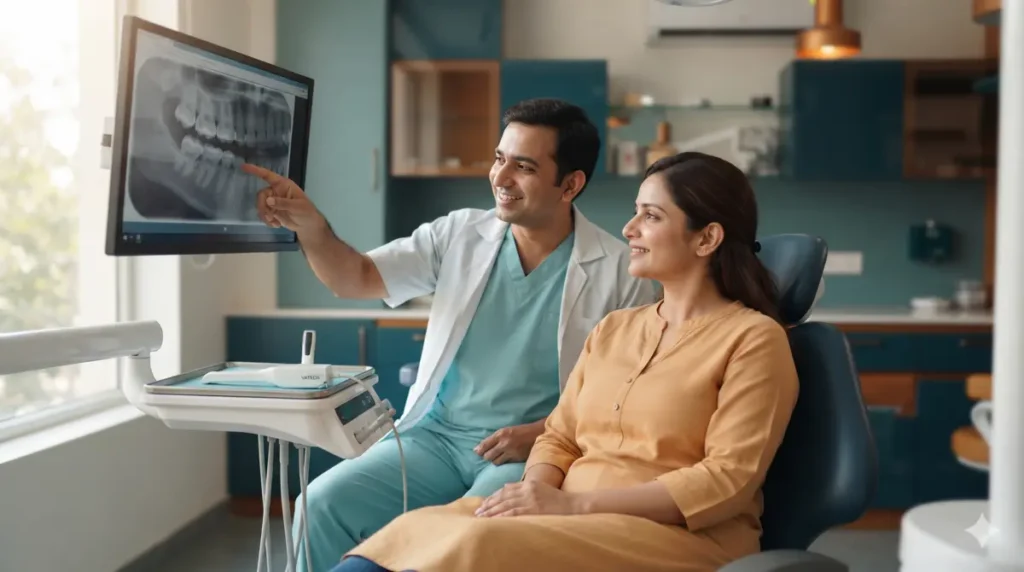
Digital image workflows may allow a clinician to view the image electronically and discuss it with a patient. The actual image and what can be interpreted depend on the image taken, its quality, the clinical question and professional interpretation. Avoid assuming that a brand name alone tells you the precise technical specifications, image quality in your case, or clinical benefit.
Sai Specialized Dental Hospital lists Vatech RVG and digital X-Ray technology. This is general information about what the clinic lists, not confirmation that the equipment is available at every branch or that it will be used in your appointment. If you are arranging care in Gomti Nagar, confirm branch availability and case-specific use with the clinic. Ask the treating dentist to explain the proposed imaging in relation to your assessment.
Ask about the method
“What type of image are you considering, and why does it fit this clinical question?”
Ask about the result
“How will the image be interpreted alongside my examination and history?”
What an image can—and cannot—answer
A radiograph is a representation of anatomy, not a complete picture of oral health. Depending on image type and area, it may help a clinician assess particular structures or features relevant to a question. It does not independently explain every symptom, establish every diagnosis, or predict every future change. Some concerns are assessed through conversation and examination; others may require information from more than one source.
Images also have limits. Positioning, the area captured, image quality and the angle of view affect what appears. A feature on an image may need clinical context before its importance can be understood. Conversely, a normal-looking image does not necessarily answer every question about discomfort or another concern. The dentist should explain what the image shows in your case, what it does not show and whether anything remains uncertain.
Use questions such as:
- “Which area does this image cover?”
- “What finding are you looking for?”
- “Can you explain what you see, and what it means in context?”
- “Does this result change the options you are discussing?”
- “What questions remain unanswered after this image?”
If you hear a technical term, ask for plain language or a visual explanation. You may ask the dentist to distinguish an observation from its interpretation: what is visible, what they think it may mean, and how confident they are given the full assessment. This helps avoid treating a single image as a complete diagnosis.
How imaging fits into a clinical assessment
Dental decisions are based on a broader assessment than equipment alone. A dentist may consider your description of the concern, relevant medical and dental history, examination findings and any available records. If imaging is discussed, its purpose is to add information relevant to a particular clinical question. The clinician then interprets that information in context and discusses what it may mean for your care.
Ask the dentist to walk through the reasoning in sequence: what prompted the concern, what examination found, what the image is expected to clarify, and how different possible results could affect the next step. This can make a recommendation easier to understand without requiring you to interpret an image yourself.
One useful way to keep the discussion clear is to ask about three parts separately:
What are we assessing?
Ask what concern or finding led the clinician to consider imaging in your particular case.
What could it add?
Ask what information may be visible and how it could help answer that question.
What follows from it?
Ask how results will be considered with your history and examination, including remaining uncertainty.
It is reasonable to request time for an explanation before deciding on next steps. If the recommendation is unclear, ask the clinician to summarize why the image is being considered and what decision may depend on it.
Questions to compare imaging options and existing records
The purpose of this table is to help structure a conversation, not to rank imaging methods or recommend one. The clinician can explain which approach, if any, is relevant to your assessment and whether existing records provide useful information.
| Discussion area | Question to ask | What to understand |
|---|---|---|
| Reason | What clinical question would this image address? | How the proposed image connects to your examination and concern. |
| Existing records | Can a previous image or report help? | Whether it is relevant to the current question and assessment. |
| Image limits | What can this image not establish? | Any unanswered questions or need for other clinical information. |
| Alternatives | Are there other appropriate ways to assess this concern? | Why the clinician considers one approach relevant to your case. |
| Next steps | How might different findings affect decisions? | What the result may change and what remains a clinical judgment. |
If you have prior images from another clinic, tell the dentist when they were taken and why, if known. Ask whether they can be reviewed and whether they answer today’s clinical question. You do not need to decide whether an image is technically adequate; that is for the clinician to assess.
Ask how digital images are handled and shared
Digital records can be stored and accessed electronically, so it is fair to ask how your dental images are associated with your patient record and how they may be used in your care. Ask who can access them for treatment, how you can request a copy, and whether they may be shared with another dental professional if you ask for a referral or second opinion.
Do not assume details about a clinic’s storage system, retention period, security controls or sharing workflow. Policies and processes vary. For accurate answers, ask the clinic directly how it handles patient records and what steps apply when you request a copy or authorize transfer. If you are sharing files yourself, ask which channel the clinic accepts and whether it needs the original image file or a report.
Privacy questions are part of informed care, not a sign of distrust. You can ask whether an image will be used only for assessment and treatment, or whether any other use requires separate permission. The clinic can explain its applicable policies and consent process.
How to discuss radiation concerns without assumptions
Dental X-rays involve ionizing radiation, so patients may reasonably want to understand why imaging is being considered. This guide does not claim that a specific exposure is risk-free, provide dose comparisons, or recommend for or against imaging. The appropriate discussion is individual: ask the dentist to explain the clinical reason, the image being considered and how the decision relates to your circumstances.
You can ask whether any previous dental images are relevant, whether the proposed image is expected to affect assessment or decisions, and what alternatives are appropriate. Tell the clinician if you are pregnant, may be pregnant, or have another circumstance you think could matter. The clinician can consider that information and explain the next steps. Do not rely on generic online safety claims or comparisons to make a decision for your case.
A balanced conversation weighs the clinical question, available information and relevant circumstances. If you remain uncertain, ask for a clear explanation of the purpose and any applicable precautions or policies before proceeding.
A practical checklist for your dental imaging conversation
Before the appointment
- Write down your concern and when you first noticed it.
- List relevant health information, medicines and previous dental care.
- Bring existing images or reports if readily available.
- Note questions about the reason for imaging, privacy or alternatives.
During the discussion
- Ask what clinical question the image may answer.
- Ask what it can and cannot show.
- Ask how it fits with examination and history.
- Ask whether the result could affect decisions.
Before leaving
- Check that you understand the clinician’s interpretation.
- Ask what remains uncertain or needs follow-up.
- Ask how to request or share your image record.
You do not need to ask every question. Start with the one that matters most to you, then ask for clarification until the explanation makes sense. If you prefer, write down the answer or ask whether the clinician can summarize the next step.
Dental X-Ray and digital imaging FAQs
Does every dental patient need an X-ray?
No. Whether imaging is relevant depends on the individual clinical question, examination and professional judgment. Ask the dentist why it is being considered in your case.
What is Vatech RVG dental imaging?
RVG is commonly used for digital dental radiography systems; Vatech is a named brand. Ask the treating dentist what system is available, whether it is relevant to your case and what the proposed image may help assess. Confirm branch availability with the clinic.
Can a digital X-ray diagnose a problem on its own?
An image is one part of assessment. The clinician interprets it alongside your concern, history and examination. Ask what it shows and what it cannot answer.
Can I ask for a copy of my dental image?
Ask the clinic how to request a copy, what file or report it can provide, and how records may be shared with another clinician. The clinic can explain its applicable record-handling process.
Should I tell the dentist if I may be pregnant?
Yes. Tell the clinician about pregnancy or any possibility of pregnancy, along with other relevant health information. The treating clinician can discuss whether imaging is relevant and what applies to your circumstances.
Ask about digital imaging in Gomti Nagar
Sai Specialized Dental Hospital lists Vatech RVG and digital X-Ray. Listing does not establish that a specific system is available at every branch or appropriate for every patient. For enquiries, confirm Gomti Nagar branch availability and discuss your individual imaging question through the clinic’s Contact page.
Educational disclaimer: This article provides general information only. It does not diagnose a condition, recommend or discourage imaging, or replace examination and advice from a qualified dental professional.