
Patient consultation guide Lucknow · Gomti Nagar
Root Canal Treatment in Lucknow: Questions to Ask Your Dentist
Preparing for a root canal consultation can help you understand the assessment, choices and next steps. Use this guide to have a clear conversation with a dental clinician in Lucknow or Gomti Nagar—without trying to diagnose yourself or decide treatment before an examination.
Educational only: Individual advice depends on clinical assessment. Contact a qualified clinician about concerns specific to your health or teeth.
Start with a clear conversation
Ask what the assessment found
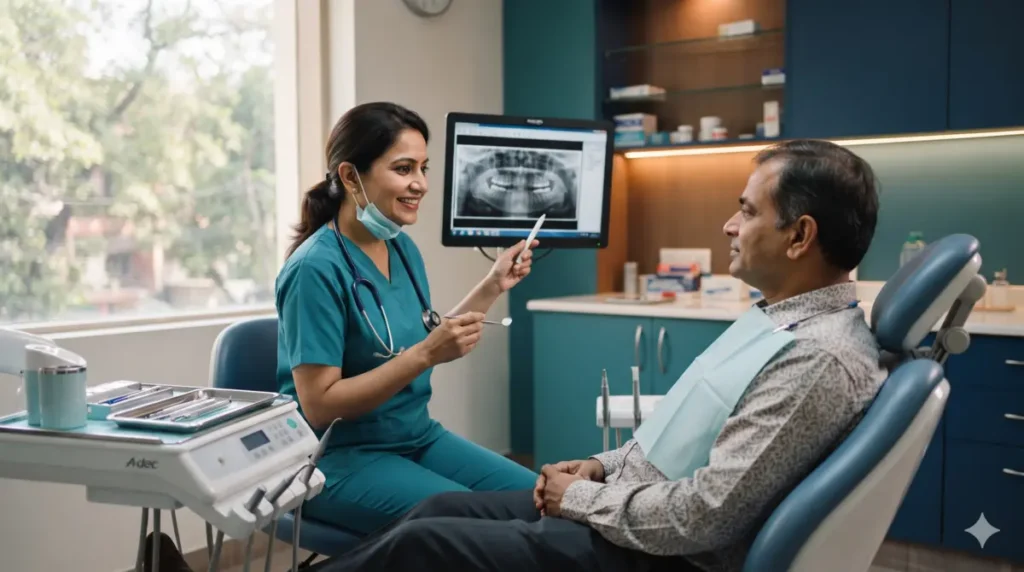
Invite the dentist to explain the tooth’s condition, what evidence supports the recommendation and what remains uncertain. Ask for plain language and pause whenever something is unclear.
Bring useful context
Share medicines, allergies, health conditions, previous dental work and relevant records or images.
Clarify plan and costs
Ask about options, appointments, comfort measures, aftercare, follow-up and an itemized estimate before deciding.
People searching for root canal treatment Lucknow or a root canal consultation Gomti Nagar may be comparing clinics, trying to understand an explanation, or preparing for a first visit. This article offers questions to take into that discussion; it does not establish whether a particular tooth needs treatment.
Before a root canal consultation in Lucknow
Write down what you want the clinician to address. You might want to understand the proposed treatment, compare alternatives, discuss anxiety, or clarify what happens after the appointment. A short list helps you keep the conversation focused, especially if you have several questions.
Bring a current list of prescription and non-prescription medicines, supplements and known allergies. Mention relevant health conditions, previous dental treatment and any prior concerns with dental procedures or medicines. Do not stop, start or change medication based on general online information; ask the clinician who knows your medical history.
If you have previous dental X-rays, reports or notes, bring them if practical. The dentist can decide whether they are relevant to the present assessment. Tell the clinician what you have already been told, what you understood, and what still feels uncertain. If you feel nervous, say so early and ask what communication or comfort arrangements can be discussed.
Questions to open with
- What did you observe during the examination?
- What is the reason for recommending root canal treatment?
- What other options might be relevant to my case?
Information to share
- Medicines, supplements and allergies.
- Relevant health conditions and previous dental care.
- Your priorities, questions and concerns about treatment.
Ask how the clinician reached the recommendation
A root canal consultation begins with understanding your history and examining the tooth and surrounding area. The clinician may ask about the concern, previous dental treatment and relevant health factors. The examination and any investigations depend on the individual situation; there is no single checklist that determines treatment for every person.
Ask the dentist to explain the findings that matter, using a diagram or image if that would help. You can ask which part of the tooth needs attention, what the proposed treatment aims to address, and whether any uncertainty remains. A recommendation should connect the assessment to a clear reason. If you do not understand a term, ask the clinician to rephrase it rather than nodding along.
Useful prompts include: “What are you trying to confirm?” “What could change the recommendation?” and “Is there time for me to consider the options?” These questions keep the conversation about your actual findings rather than general claims from websites or social media. An article cannot determine the cause of symptoms or diagnose a tooth remotely.
Discuss imaging and what it is for
Dental imaging may help a clinician assess structures not visible during a visual examination. Ask whether an image is recommended, what question it is meant to answer, and how the result could affect the plan. Also ask whether existing images can be reviewed or whether a new image is needed. The clinician should explain the relevance to your case.
Sai Specialized Dental Hospital lists digital X-Ray/Vatech RVG among its services. That listing does not mean imaging is used in every case. Whether an image is appropriate depends on the clinical assessment and clinician judgment. Ask what the proposed image can show, what it cannot establish on its own, and whether there are other appropriate ways to clarify the question.
Do not assume that a particular scan, device or test is automatically part of root canal treatment. Ask for each proposed investigation to be connected to a specific decision. This makes it easier to understand the plan without treating equipment names as a substitute for a careful explanation.
Clarify treatment choices and the tooth’s restoration
Ask whether root canal treatment is the recommended option based on your examination, and what alternatives could be considered. Depending on the tooth and the clinical findings, the dentist may discuss different approaches or explain why a particular option is not suitable. Do not assume every alternative fits every tooth or patient.
Ask what the proposed treatment involves at a high level, which parts may happen at separate appointments, and what the next step would be after treatment. Root canal care addresses the inside of a tooth, but the plan may also include restoring or protecting the tooth afterwards. Ask what restoration is being considered, why it is recommended, and whether that recommendation depends on findings during treatment.
Use a comparison to organize the discussion, not to make a decision without your dentist:
| Topic | Ask the clinician | Clarify before deciding |
|---|---|---|
| Assessment | What findings support this recommendation? | What is known, and what remains uncertain? |
| Alternatives | What other options apply to my tooth? | Benefits, limitations and implications of each option. |
| Restoration | What may be needed after root canal treatment? | Purpose, timing and whether it is included in the plan. |
| Follow-up | How will we review progress? | Who to contact and when a review is recommended. |
Ask about appointments, comfort and communication
There is no dependable visit count or exact timeline for everyone. Ask how many appointments the dentist currently expects for your case, what each appointment is intended to do, and what factors could change the schedule. Ask how the clinic will explain any changes if the plan needs to be adjusted after assessment.
Comfort matters, and it is reasonable to discuss it before treatment. Ask what comfort measures or local anaesthetic options the clinician considers appropriate, how you can signal that you need a pause, and how discomfort during or after treatment should be reported. Avoid relying on promises that treatment will be painless; your clinician can explain what is expected and how concerns will be managed in your circumstances.
If you are worried about the procedure, tell the dentist specifically what concerns you—such as uncertainty, previous experiences, sounds or the need for breaks. Ask whether the clinician can explain each stage before it happens. You can request a moment to ask questions or revisit consent. Clear communication is part of care, not an inconvenience.
Share relevant history
Bring medicine and allergy information, prior records and your main questions.
Ask for plain language
Confirm the purpose of examination, any imaging and proposed options.
Confirm next steps
Understand written instructions, follow-up and how to raise questions later.
Discuss costs without relying on online estimates
Fees can depend on the assessment, the proposed care and what is included. This article does not provide prices or estimate Sai Specialized Dental Hospital fees. Request a current, itemized estimate directly from the clinic before making a decision.
Ask whether the estimate includes consultation, any imaging, the root canal procedure, temporary or final restoration, follow-up and any other proposed services. Clarify which elements are separate, whether additional care could be recommended if findings change, and how you will be informed before costs change. Ask whether the written estimate has a validity period or payment terms. These are practical questions, not assumptions about a clinic’s pricing policy.
If comparing providers in Lucknow or Gomti Nagar, compare the described scope of care and follow-up—not a single headline amount. Ask who will explain the plan, how to obtain copies of records and whom to contact if you need clarification.
Understand aftercare and follow-up before treatment
Before leaving a consultation or treatment visit, ask for instructions that apply to your own situation. Clarify what to expect, what activities or foods may need special consideration if any, how to manage medicines only as directed, and what concerns should prompt contact with the clinic. This guide does not give personalized post-treatment instructions; follow the treating clinician’s advice.
Ask who to contact if you have a question after the appointment and what information to share. If you experience a concern that feels urgent or is worsening, contact a qualified clinician promptly for guidance. This guide does not imply that any particular clinic offers emergency services or after-hours availability.
Ask whether a follow-up visit is recommended, what it will check and how the dentist will assess the tooth and restoration over time. Confirm how to arrange that review and whether you should contact the clinic if you have not received instructions. Keep written guidance with your records so you can refer to it later.
Practical reminder
A sound decision comes from your clinical findings, a clear explanation of relevant options and your informed agreement. Ask the dentist to distinguish what is known from what is still uncertain. Take time to understand the plan and seek clarification before proceeding.
Take-away checklist for your root canal consultation
Before you leave, confirm
- What the assessment found and why treatment is being discussed.
- Whether imaging is proposed and what clinical question it addresses.
- What alternatives are relevant, and why the clinician recommends one.
- What restoration may be considered after root canal treatment.
- Expected appointment sequence for your case and factors that may change it.
- Comfort arrangements, aftercare instructions and follow-up plan.
- Itemized costs, what is included and how changes will be discussed.
- How to contact the clinic with questions or concerns.
You can ask again
If an explanation is unclear, request simpler wording, written notes or time to think. You do not have to make a decision before you understand the plan.
Root canal consultation FAQs
What should I bring to a root canal consultation?
Bring a medicine and allergy list, relevant health history, previous dental records or images if available, and written questions. The clinician can decide which records matter to the current assessment.
Will every consultation include a digital X-ray?
Not necessarily. The need for imaging depends on the case and the clinician’s assessment. Ask what an image is intended to show and how it could affect decisions.
How many visits will root canal treatment require?
There is no universal visit count. Ask the treating dentist what they expect for your case and what clinical factors could change the plan or schedule.
Can the clinic explain costs before treatment?
Ask for a current itemized estimate directly from the clinic, including what is and is not included and how any change in the proposed plan would be communicated.
Planning a consultation in Lucknow?
Sai Specialized Dental Hospital lists root canal treatment and digital X-Ray/Vatech RVG. Contact the clinic to ask about a root canal consultation in Gomti Nagar, what information to bring and how to request an itemized estimate. Individual care depends on clinician assessment.
Contact Sai Specialized Dental HospitalEducational information only. This article does not diagnose, recommend treatment for an individual or replace advice from a qualified dental clinician.
Related articles
Dental X-Ray Lucknow: Questions About Digital Imaging
Learn what to ask about dental X-rays, digital imaging, Vatech RVG, image limits, privacy and whether imaging may relate to your dental assessment.
Read article: Dental X-Ray Lucknow: Questions About Digital Imaging
Aesthetic Dentistry in Lucknow: Questions to Ask Your Dentist
Preparing for aesthetic dentistry in Lucknow? Use these questions to discuss your goals, suitability, options, risks, maintenance, timelines and costs.
Read article: Aesthetic Dentistry in Lucknow: Questions to Ask Your Dentist
Dental Check-Up Gomti Nagar: Prepare and Ask Better Questions
Prepare for a dental check-up in Gomti Nagar with a practical checklist, health details to bring, and clear questions about findings, options, costs and follow-up.
Read article: Dental Check-Up Gomti Nagar: Prepare and Ask Better Questions6 articles available.
Load more articles