
Patient journey · Digital imaging About 7-minute read
Digital Dental X-Ray: Questions to Ask Your Dentist
Dental images can add useful information to an examination, but they are not an automatic part of every visit. If you live in Gomti Nagar or nearby and have questions about a digital dental X-Ray, a clear conversation can help you understand why it is being considered, what it may show, and how the result could affect care.
Comfort-first care: You can ask questions before imaging begins, explain relevant health circumstances, and request an explanation of findings in language that makes sense to you.
At a glance: start with purpose, not assumptions
First: clinical assessment
A dentist considers your history, symptoms, examination and available previous records. Imaging may be recommended when it can help answer a relevant clinical question. It is not automatically needed at every appointment or for every person.
Ask why
Request the specific reason this image is being suggested today.
Ask what happens next
Find out what the image may help assess and how the result could influence decisions. Imaging supports clinical judgement; it does not replace discussion or examination.
Share useful context
Tell the dental team about relevant medical circumstances, pregnancy possibility if applicable, recent dental images, symptoms and concerns. Ask how these details affect the plan.
A three-phase guide to discussing dental imaging
Phase 1: before your visit
Gather any recent dental records or images you can access. Note where and when they were taken, if known. Make a short list of questions: what prompted imaging, what area is being considered, and whether prior records could be reviewed instead. You do not need technical vocabulary. Describe symptoms in your own words, including when they began and what changes them.
Phase 2: during assessment
Ask the dentist to explain the clinical concern before the image is taken. Depending on the question, a clinician may consider different image types or decide imaging is not relevant at that time. Ask what the proposed view is intended to assess, whether an alternative fits, and what information an image cannot provide. Pause if you need clarification.
Phase 3: review and plan
After review, ask the dentist to connect any finding with your symptoms and examination. Clarify whether it changes the recommended next step, whether monitoring or another assessment is relevant, and when you should revisit the issue. If there is no important finding, ask what that means for the original concern and whether follow-up remains appropriate.
Dental imaging questions for patients
These prompts help keep the conversation focused and collaborative. Choose the ones that match your situation; you do not need to ask every question.
Why recommend imaging now?
Ask which part of your history or examination prompted the recommendation. The answer should identify a clinical purpose rather than rely only on habit. You may ask whether the image is intended to investigate a symptom, assess a particular area, or support planning.
What are you looking for?
Ask what the image may help evaluate, in plain language. The dentist can describe the area of interest and the kind of information the image may provide. Different views answer different questions, so ask why the proposed view suits the clinical concern.
Are there alternatives?
Ask whether examination alone, review of existing images, observation, or another approach is reasonable in your circumstances. Alternatives depend on the clinical question; asking does not mean refusing care. Your dentist can explain benefits and limitations of each option.
How will it affect the plan?
Ask how different possible results could change the next step. This helps distinguish an image that may guide a decision from one unlikely to affect current care. You can also ask when results will be discussed and who will explain them.
Understanding common imaging terms
Dental teams may use different image types for different questions. These descriptions are general; your dentist determines whether a particular image is relevant based on your assessment.
| Term you may hear | Useful discussion point | Question to ask |
|---|---|---|
| Intraoral image | A receptor is positioned inside the mouth to capture a selected area. | Which teeth or nearby structures does this view cover? |
| Bitewing view | A type of intraoral view used to examine specified parts of upper and lower teeth together. | What concern in this area prompted this view? |
| Panoramic image | A broader image of the jaws and teeth may be considered for selected clinical purposes. | Why is a broader view relevant to my question? |
| Three-dimensional imaging | More detailed spatial information may be considered for specific planning questions. | What additional information is needed, and how will it affect planning? |
Digital describes how an image is captured or handled electronically. The label alone does not tell you why the image is needed, what it can show, or whether a particular view suits your situation. Ask about the purpose and limitations rather than assuming every digital system or image works the same way.
Myth and fact: keep expectations realistic
Myth: everyone needs images at routine visits
Fact: Whether imaging is relevant depends on assessment and individual circumstances. A dentist may recommend it, defer it, or use existing records, depending on the clinical question.
Myth: digital means an image answers everything
Fact: Images provide a view of selected structures. They are interpreted alongside history and clinical examination, and may not explain every symptom or concern on their own.
Myth: asking questions delays good care
Fact: A brief explanation can help you understand the purpose and take part in decisions. Tell the team if you need more time or a simpler explanation.
A simple checklist for your appointment
- Describe the concern or symptom and when it began.
- Mention previous dental imaging and bring accessible records when possible.
- Share relevant medical history and circumstances that could affect the imaging discussion.
- Ask why the image is being considered and what it may help evaluate.
- Ask whether an existing image or another approach may be appropriate.
- After review, ask what the finding means for your individual next steps.
If a recommendation remains unclear, it is reasonable to ask the dentist to explain it again, use a drawing, or show the relevant area on the image when available. If you have concerns about imaging, state them plainly. The dental team can address your questions in context; an online article cannot determine what is appropriate for you.
For patients in Gomti Nagar
Whether you are visiting from Gomti Nagar or another nearby area, use the appointment as a chance to connect imaging with your own concern rather than treating it as a routine checkbox. Bring previous records if available, particularly if another dentist or facility captured images recently. Tell your dentist when they were taken and which area they covered, if you know.
When arranging or attending a visit, you can ask how to share previous records and how the dentist plans to discuss findings. If you are balancing work, family or travel, ask whether the conversation and any review can be coordinated with your visit. Do not assume that a prior image can replace a new assessment; the dentist must decide whether it is suitable and sufficiently relevant.
Good communication is especially useful when you feel nervous, have had uncomfortable imaging before, or are unsure what a term means. You can ask the team to explain the process before it begins, tell them if positioning is difficult, and request a pause if you need one. Comfort and clarity are valid parts of the conversation.
Frequently asked questions
Should I expect a digital dental X-Ray at every check-up?
No automatic schedule applies to everyone. The dentist considers your assessment, history, current concern and available records when deciding whether imaging is relevant. Ask what clinical question an image would address at this visit.
Can I ask to see or discuss my image?
Yes. Ask the dentist to explain the area being reviewed and how any finding relates to your examination. An image can be useful to discuss, but interpretation should come from a qualified clinician in the context of your care.
What if I had imaging at another clinic?
Tell your dentist and ask whether those records can be reviewed. Relevance depends on image quality, coverage, timing and the clinical question. The dentist can decide whether existing material helps or whether another assessment is appropriate.
What if I am worried or have a personal health concern?
Raise it with the dental team before imaging. Share relevant circumstances and ask how they affect the recommendation. Your dentist can discuss your individual situation and whether another approach is suitable; do not rely on general online guidance for a personal decision.
Make your next imaging conversation clearer
Before any image is taken, ask why it is recommended, what it may help evaluate, whether alternatives apply, and how the result could guide your next step. Bring existing records where possible and tell your dentist what matters to you. Personal decisions belong in a conversation with your dental professional.
Explore more dental guidance
Browse further patient resources on the Sai Dental Clinic website.
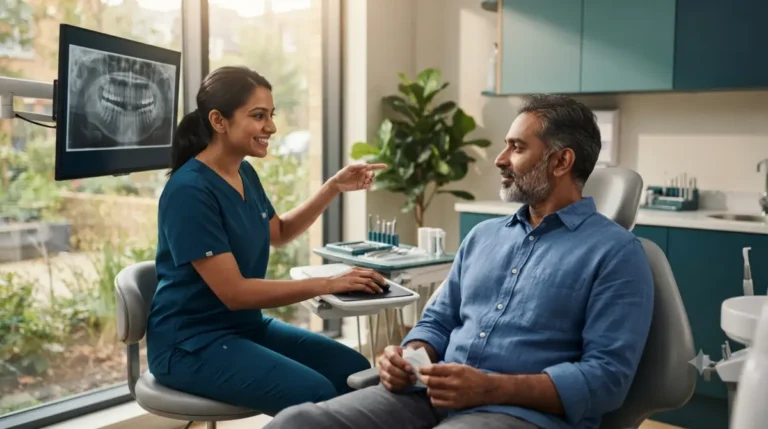
Digital Dental X-Ray: Questions to Ask Your Dentist
Learn what digital dental X-rays can help evaluate, why imaging may be suggested, and practical questions Gomti Nagar patients can ask their dentist.
Read article: Digital Dental X-Ray: Questions to Ask Your Dentist
Aesthetic Dentistry Consultation: Questions to Ask
Exploring aesthetic dentistry in Gomti Nagar? Use these practical questions to discuss goals, oral health, options, risks, upkeep and costs with your dentist.
Read article: Aesthetic Dentistry Consultation: Questions to Ask
Oral Surgery Consultation: Questions to Ask Your Dentist
Preparing for oral surgery consultation in Lucknow? Use this dentist question checklist to discuss purpose, alternatives, preparation, follow-up, recovery and concerns.
Read article: Oral Surgery Consultation: Questions to Ask Your Dentist6 articles available.
Load more articles